When my family first moved to Singapore, I spent hours hovering over a digital map, trying to triangulate the perfect place to live. I wanted a home that was close to my office in the Central Business District, near a great grocery store, and walking distance to a good local primary school. I saw that Singapore had over a hundred primary schools, so I assumed finding a spot would be a breeze.
When I first tried this, I made a massive miscalculation. I found a lovely condo near a highly reputed school, signed the lease, and assumed proximity guaranteed access. I learned the hard way that the Singapore school admission system does not work like that.
As an expat, choosing where to live is not just about finding a nice apartment with a good pool. You are choosing a school ecosystem. The way primary schools are distributed across the island quietly but powerfully dictates where expat families can, and should, settle. Here is my honest guide on how the number and geography of primary schools shape expat life in Singapore, and how you can navigate this map without losing your mind.
The Big Number: 177 Schools (And Why It Is Deceptive)
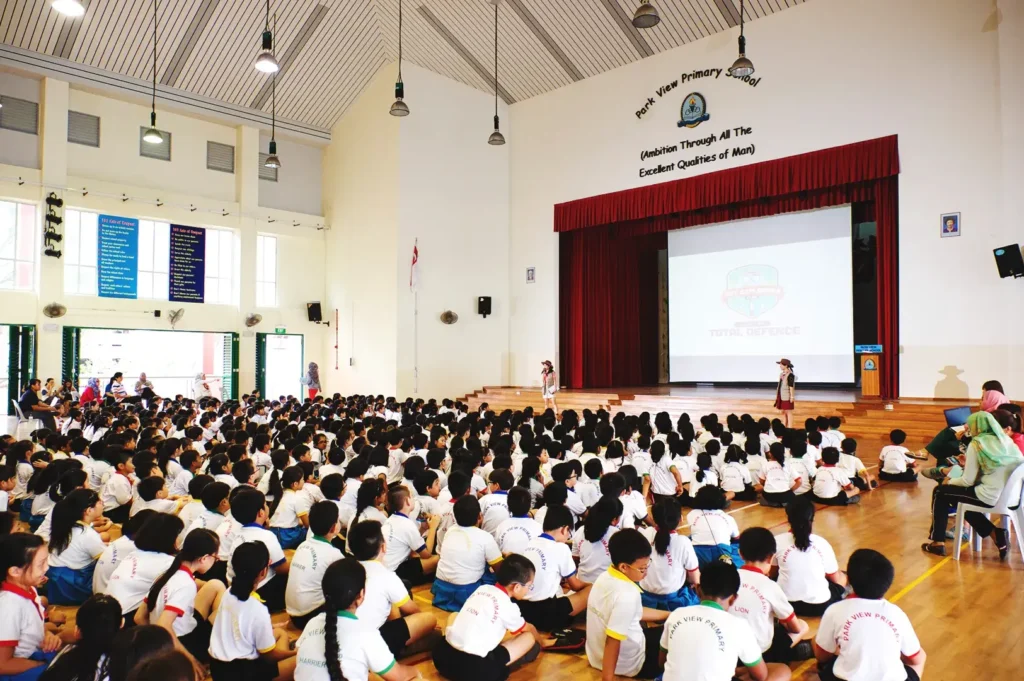
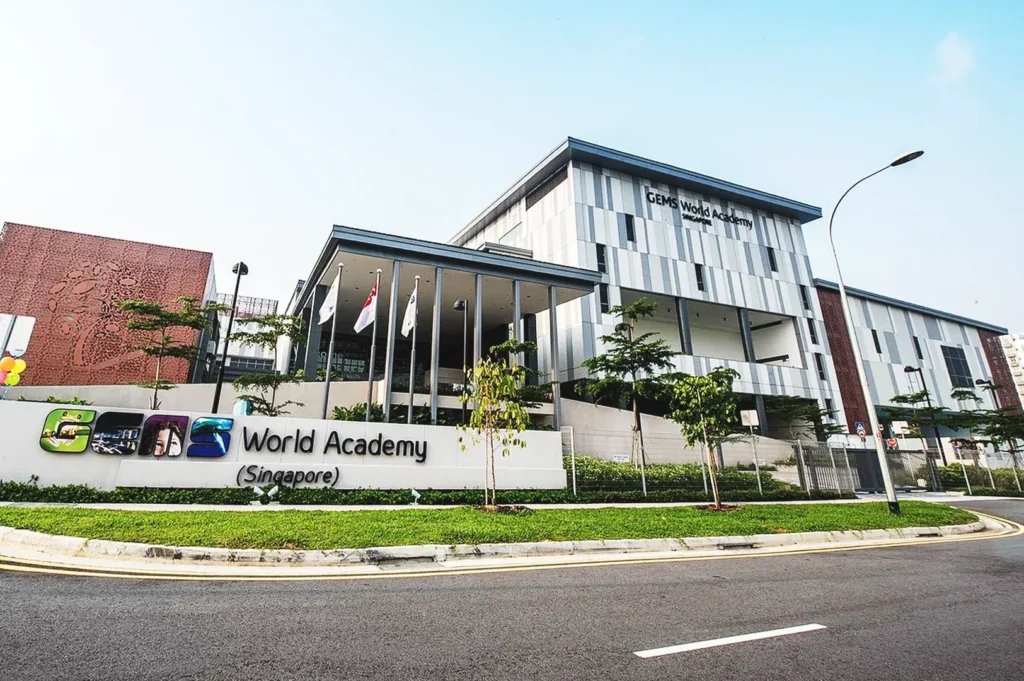
According to the latest Ministry of Education data, the number of primary schools in Singapore currently stands at 177, made up of 136 government schools and 41 government aided schools. On paper, it feels generous, almost reassuring for a compact city. But once you begin navigating primary education here as a parent, that number starts to feel… distant.
Because in reality, no one is choosing from all 177 primary schools in Singapore.
Most families narrow it down, quietly, instinctively, to what is reachable. A handful of schools in Singapore within a 1 to 3 kilometre radius. The education system isn’t built for wide browsing. It’s built for proximity, routine, and daily movement.
I remember standing outside a primary school in Tampines just before 7 a.m. The air was already warm, carrying the faint scent of kopi from a nearby coffeeshop. Children in oversized uniforms shuffled forward, some half-awake, others already chatting. It felt less like a system, and more like a living rhythm.
That’s when it clicked:
This isn’t about choice. It’s about geography.
Primary Education Geography: Where You Live Is the Decision
Singapore’s education system is highly structured, but the lived experience of primary education is deeply local.
Most families consider only nearby mainstream primary school options
School clusters form naturally in mature estates
Distance affects both admission and daily quality of life
In places like Bedok, Woodlands, or Jurong, you’ll find dense clusters, Damai Primary School, Casuarina Primary School, even long-established institutions like Mee Toh School or CHIJ Primary. These areas give families options.
But move into central neighborhoods, River Valley, Robertson Quay, and the map tightens. Suddenly, you’re working with one or two viable schools. That changes everything.
Because here, primary education isn’t just about curriculum.
It’s about how your mornings begin.
Admission Reality: The Quiet Rules Behind the System
Beneath the surface of Singapore’s structured primary school admission lies a set of quiet, unwritten rules that shape access and opportunity.
For Singapore Citizens and Permanent Residents
Under the compulsory education act, all Singapore citizens must complete six years of primary education. But placement into a primary school is not guaranteed by preference alone.
The system prioritizes:
Distance (within 1km or 2km)
Alumni or sibling connections
Balloting if demand exceeds supply
This means living near multiple primary schools in Singapore gives you flexibility. If one school is oversubscribed, another nearby becomes your fallback.
For permanent residents, the process is similar, but slightly lower in priority. The strategy remains the same: choose neighborhoods with density.
For International Students and PR Children
For international families and some PR children, entry into the education system works differently.
Placement is based on vacancies
Managed centrally by the Ministry of Education
Not tied to distance
This means living next to a school doesn’t guarantee entry. But living in a cluster of schools in Singapore increases your statistical chances.
It’s a quieter kind of strategy, less about control, more about probability.
Choosing a Home: A Practical Way to Think About It
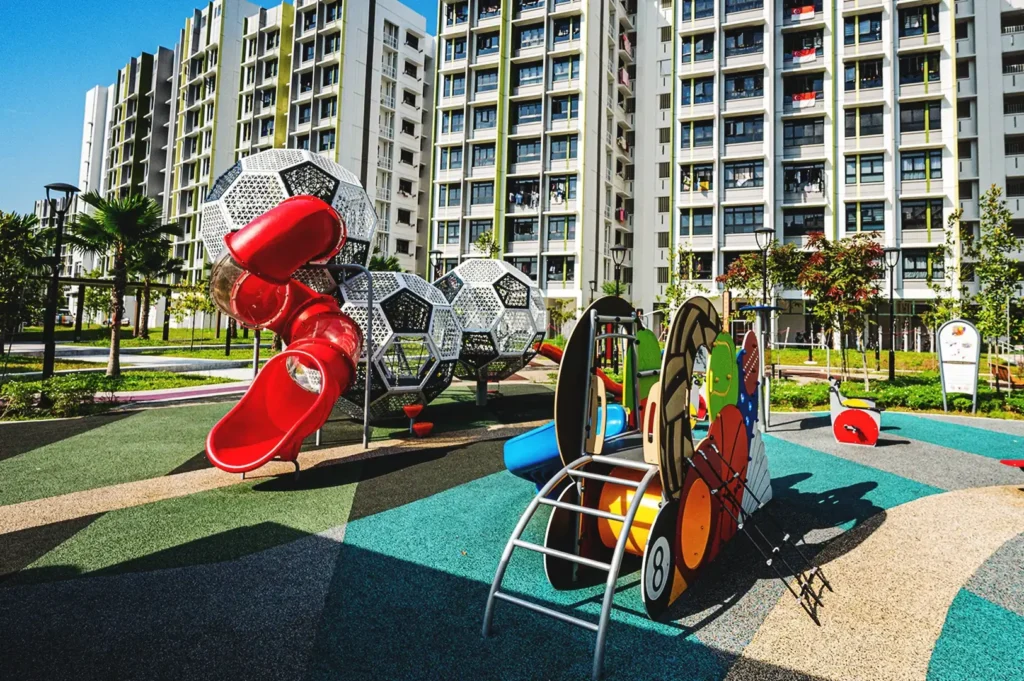
When families ask me where to live, I don’t start with condos or MRT lines.
I start with schools.
1. Map the Cluster
Take a simple approach:
Draw a 3km radius around your potential home
Count the primary schools in Singapore within that space
Aim for at least 4–5 options
Less than that, and your flexibility shrinks quickly.
2. Experience the Commute
A school 2km away can feel very different depending on the route.
Is it a direct bus or multiple transfers?
Is there shelter from rain?
How long does it actually take at 7 a.m.?
I’ve seen what looks like a 10-minute drive turn into a 35-minute crawl. And for a child, that difference accumulates, day after day.
3. Build a Realistic Plan
Instead of chasing only top schools, build a layered plan:
One aspirational option
One realistic school
One reliable fallback
Because in Singapore’s education system, adaptability often matters more than perfection.
What Most Families Don’t See Coming
Many families underestimate how competitive school admissions can be and the importance of having multiple nearby options.
The “One School” Trap
Choosing a home based on a single “dream” primary school is risky.
I’ve known families who moved close to a highly sought-after school, only to miss out during balloting. With no nearby alternatives, they ended up with long commutes, sometimes over 40 minutes each way.
Ignoring School Culture
Not all primary schools in Singapore feel the same.
Some focus heavily on academic excellence and preparation for national examinations like the Primary School Leaving Examination (PSLE). Others place more emphasis on:
Holistic development
Co curricular activities
Character development
Choosing a school without understanding its culture can create quiet tension, especially for children adjusting to new expectations.
Overlooking New Developments
New towns like Tengah or Tampines North often introduce new primary schools to meet high demand.
They may lack the legacy of older schools, but they offer:
Lower competition
Modern facilities
More balanced student intake
Sometimes, newer doesn’t mean worse, it just means less crowded.
The PSLE and the Structure of Learning
At the end of primary education, every child takes the school leaving examination PSLE.
This is one of Singapore’s key national examinations, determining placement into secondary school and shaping the next stage of secondary education.
Core subjects include:
English language
Mathematics
Science
Mother tongue languages (including Malay language or Chinese)
The PSLE results follow a structured scoring system, using Achievement Levels rather than raw scores. It’s designed to reduce excessive comparison, but the importance of the exam remains.
I’ve seen how this shapes daily life.
Evenings filled with revision.
The quiet rise of private tuition as families try to support their children.
Subject-Based Banding and Learning Pathways
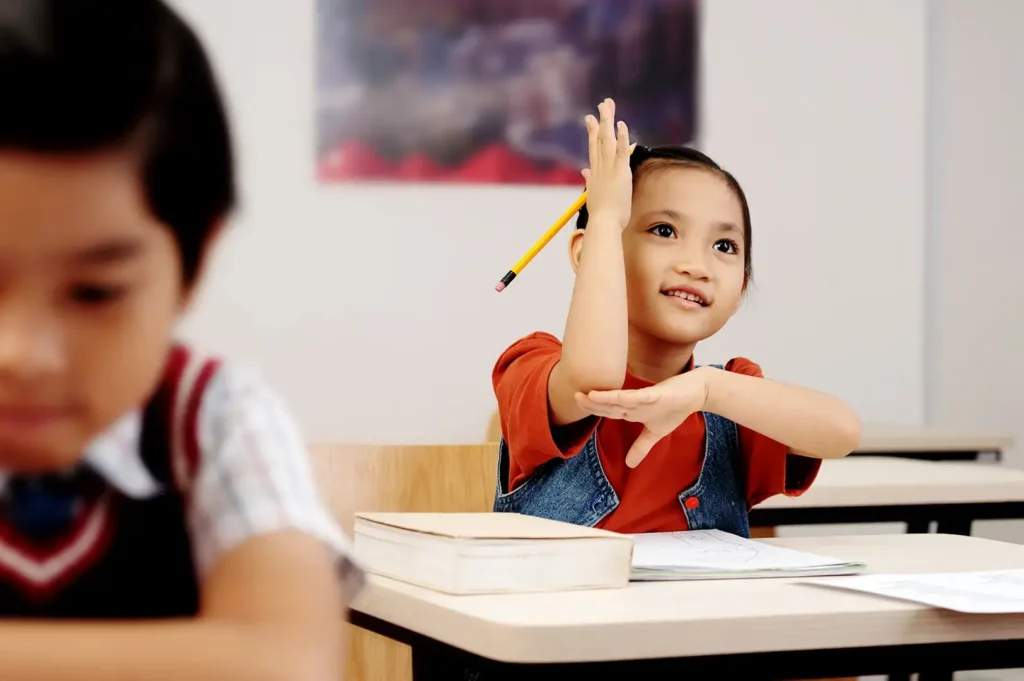
Singapore’s system has evolved to support different learning speeds.
Through subject based banding, students can take subjects at:
Standard or foundation levels
Based on their strengths and learning needs
This allows academically strong students to stretch further, while others receive learning support without being left behind.
It’s a subtle shift, but an important one.
Beyond Academics: The Role of Co-Curricular Activities
Education here isn’t just about results.
Co curricular activities (CCAs) play a central role in shaping students beyond the classroom.
These include:
Performing arts (music, dance, drama)
Physical sports
Uniformed groups
They build teamwork, resilience, and identity, forming part of a student’s overall holistic development.
Some schools even integrate applied learning and citizenship education, grounding students in real-world contexts and shared values.
Understanding School Types in Singapore
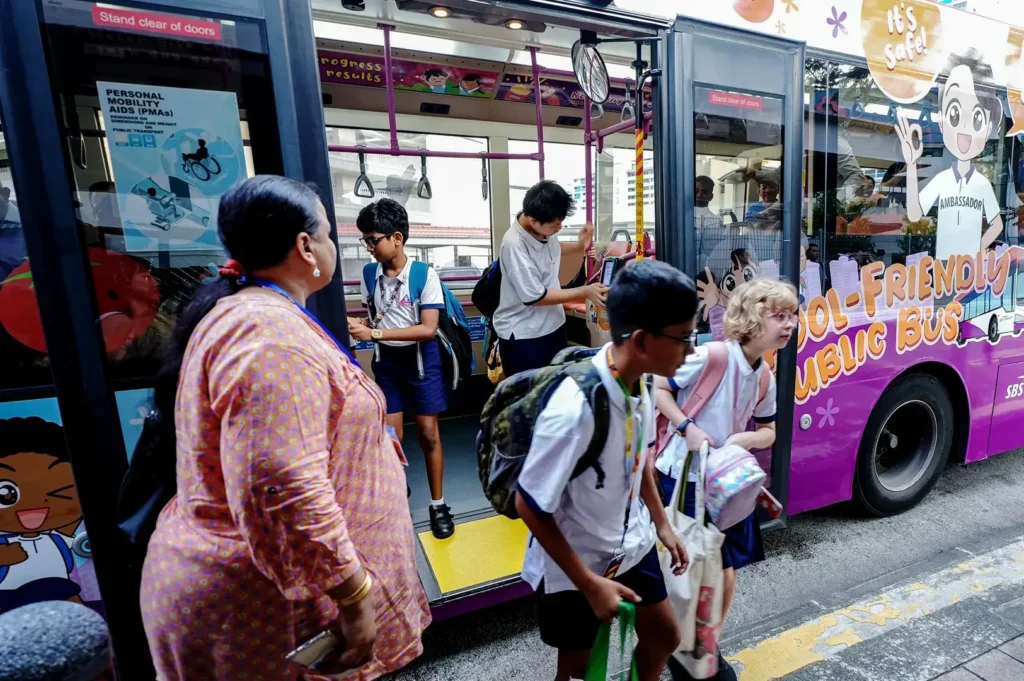
The education system includes several types of schools, each with its own character.
Government and Government-Aided Schools
Make up the majority
Supported by the Singapore government
Often run in partnership with religious bodies
Independent Schools
Fewer in number
Offer greater autonomy
Sometimes linked to future pathways like junior college or centralised institutes
Special Assistance Plan Schools
Focus on Chinese culture
Offer higher mother tongue languages
Designed for bilingual excellence
These differences shape not just academics, but the daily environment a child grows up in.
Support Systems: Ensuring Access for Every Child
Singapore’s compulsory education framework ensures every child has access to schooling.
For families who need support, the system provides:
Financial aid for low income families
Subsidies for uniforms, books, and meals
Targeted special educational and learning programs
This ensures that formal education remains accessible and that the social dynamics of primary school in Singapore is understood, even within a competitive system.
A Final Reflection: Why the Number Alone Doesn’t Matter
Singapore may have 177 primary schools, but for any expat family, the number that truly matters is how many of those schools are nearby, suitable, and realistically within reach.
Do not let the map intimidate you. While the system is highly structured, it is also deeply logical. By prioritizing school density over trendy zip codes, running realistic commute tests, and maintaining backup options, you can find a neighborhood that supports your Expat Life in Singapore beautifully.
Take a deep breath, grab a coffee, and start drawing those 2-kilometer circles. You will find your perfect spot.