By C.A. Lorin for Expat Life Singapore
Singapore is a city that builds relentlessly forward. We live surrounded by sleek glass, polished steel, and engineered concrete that stretches endlessly toward the sky. Living in this perpetual motion, it is incredibly easy to assume that history is something we only preserve in air conditioned museums. We treat the past as an exhibit. But if you step off the multi lane expressways and walk the eastern corridors, the city’s true memory refuses to be paved over.
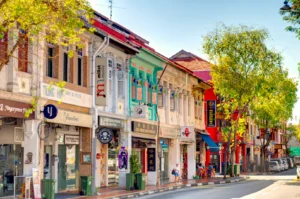
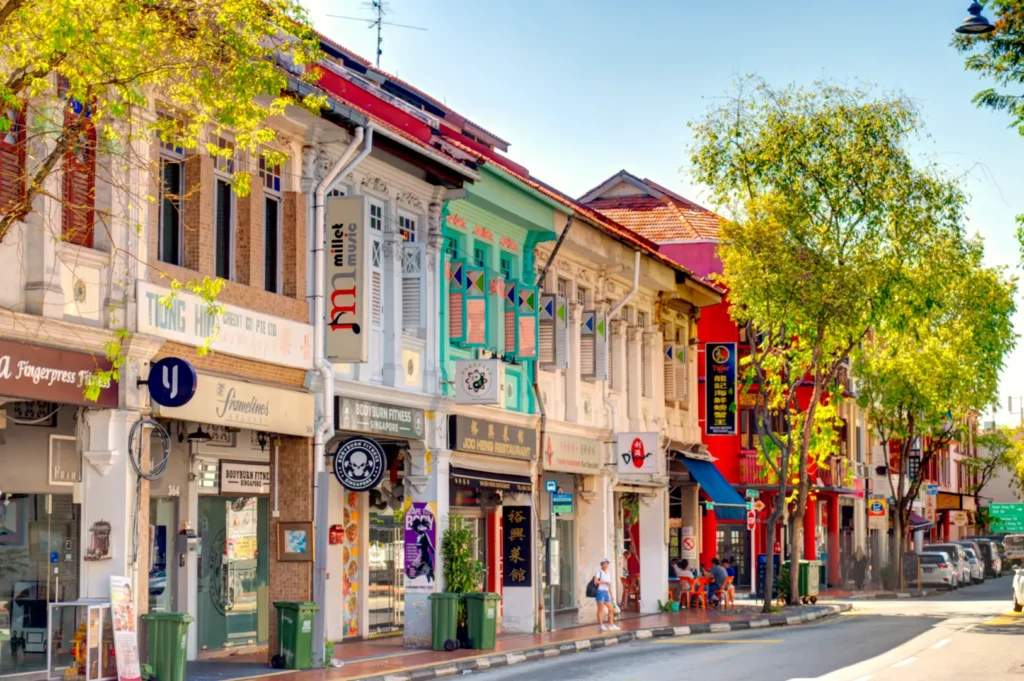
I stood on the corner of East Coast Road early on a Tuesday, just as the heavy tropical sun began to bake the damp asphalt. Across the street, a row of heritage Peranakan shophouses caught the harsh morning light. The plaster was thick with a saturated, ceramic like seafoam green, peeling gently at the curved edges of a wooden window shutter. A deep, angular shadow cut across the intricate floral tiles framing the heavy timber doorway. From deep within the narrow five foot way, the faint, rhythmic scrape of a stiff broom against the pavement echoed outward. The rich scent of roasted coffee beans and wet earth hung heavily in the warm air, settling into the weathered cracks of the facade. The paint itself seemed to carry a stubborn heat, holding onto the moisture of countless monsoon rains.
We brush past these vibrant facades constantly, often treating them as mere colorful backdrops for our hurried routines. Yet, these structures carry a profound, quiet weight. Heritage is not just a brass plaque pinned to a wall. It is the physical, breathing memory of a space. It lives in the uneven, tactile ridges of hand pressed tiles and the defiant vibrancy of pastel plaster that refuses to fade beneath the blistering equatorial sun. When we finally slow down enough to trace the lines of a carved wooden eave, we connect instantly with the thousands of footsteps that wore down these exact pathways. The walls remember the damp heat, the violent storms, and the endless, vibrant hum of the street. They serve as solid anchors of continuity in a metropolis entirely addicted to speed.
The next time you find yourself walking through Katong, force yourself to look up. Do not simply march past the bright emerald, coral, and cerulean walls on your way to a meeting. Stop for a fraction of a minute. Press your hand against the warm, textured plaster of a pillar. Notice the way the shifting afternoon light casts long, sharp shadows across the ceramic tiles. Let the quiet history of the street settle into your bones. In a small way, this is what local tourism singapore can look like: moving slowly, noticing deeply, and letting the neighborhood tell its own story. You will quickly realize that the most beautiful stories of this city are not built of glass and steel. They are painted boldly onto the walls we walk past every single day.