Trying to understand a new education system can feel like learning a new language. You’re faced with acronyms, unfamiliar terms, and pathways that look very different from what you might be used to. As a parent, you simply want to know: where does my child fit in, and what comes next?
When it comes to education Singapore, this article focuses on helping you navigate the unique features and structure of the local system.
If you’re navigating the Singapore education system, you’ve probably discovered that while its quality is world-renowned, its structure can seem complex at first glance.
This article is designed to be your quick reference guide. We’ll break down each education level in Singapore by age, explain the key transition points, and decode common terms you’ll encounter. Our goal is to give you a clear, straightforward map of your child’s academic journey, so you can feel confident and informed.
For a more comprehensive overview—covering topics like school fees, financial assistance schemes, and admissions—you can explore our Singapore Education System: A Comprehensive Guide for Expat Parents.
Overview of the Singapore Education System and Education Levels
At its core, Singapore’s education system is a logical progression designed to build a strong foundation and then allow for specialization based on a student’s strengths and interests. The Ministry of Education (MOE), through its centralized approach, ensures that education oversees the development, management, and supervision of the national curriculum, which promotes academic excellence, moral education, and national education.
It can be broken down into four main stages:
Pre-school (Ages 3–6): Early Childhood Development in Education Singapore
This is an optional but highly popular stage in early childhood development for children ages three to six. It focuses on foundational literacy, numeracy, and social skills through play-based learning. Pre-schools are run by private and anchor operators supported by the government.
Here, children are gently introduced to English and their Mother Tongue language, preparing them for compulsory education at the next level.
Primary Education (Ages 7–12): The Primary School Curriculum and Foundation
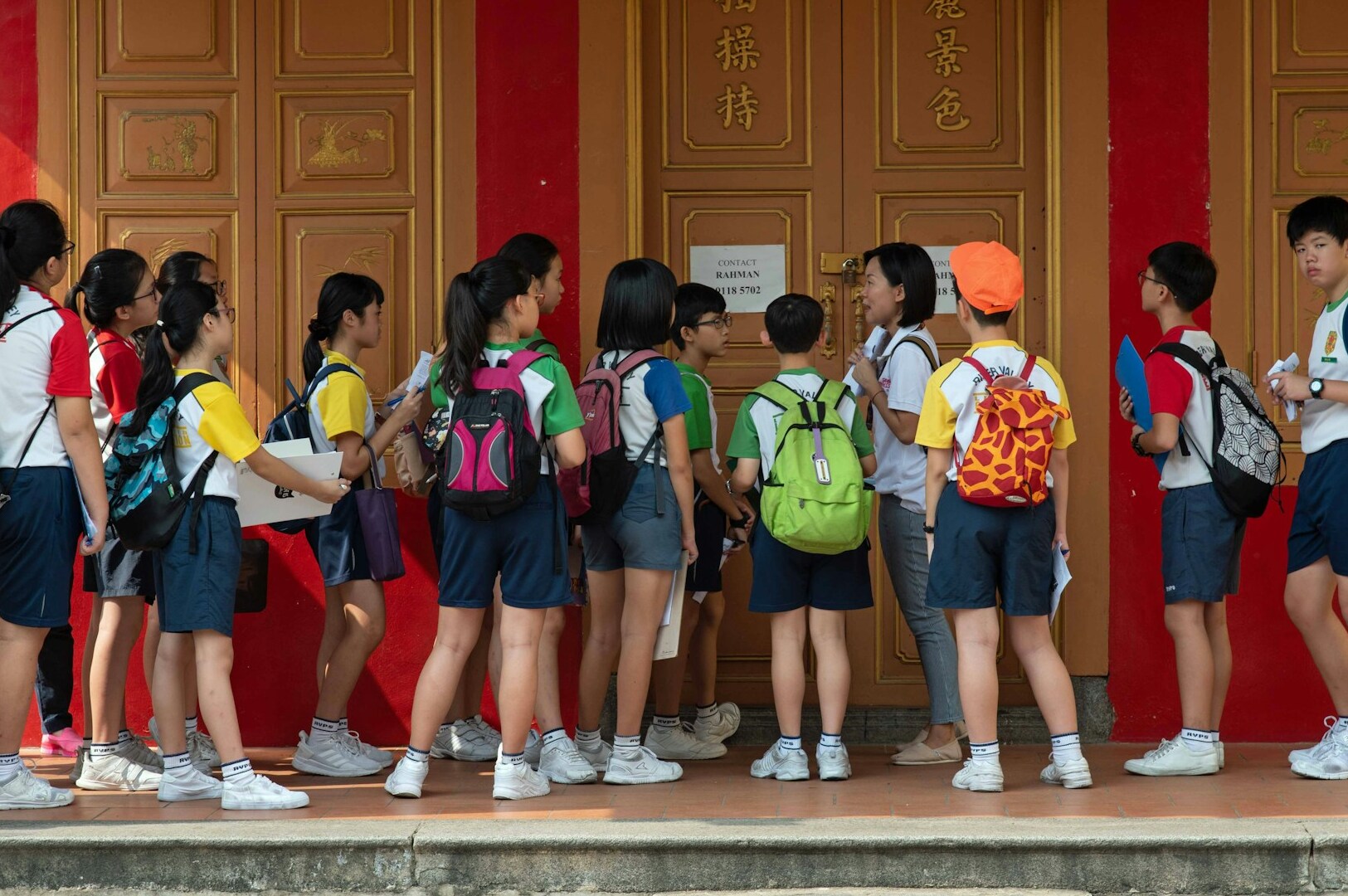
This is the first compulsory education stage in Singapore, which applies specifically to Singapore citizens. All Singaporean students must attend six years of education at primary schools, from Primary 1 to Primary 6.
The primary school curriculum includes core academic subjects such as English, Mathematics, Science, and a Mother Tongue language, along with physical education, moral education, and national education.
The goal here is to equip students with strong literacy and numeracy skills while fostering values and resilience.
Secondary Education and Secondary School Streaming (Ages 13–16/17)
After primary school, students move on to secondary education, where they are placed into different courses based on their Primary School Leaving Examination (PSLE) results. This stage introduces a variety of pathways that match each student’s learning pace and interests.
Students may attend mainstream schools, independent schools, or specialised schools, including specialised independent schools and performing arts institutions.
Post-Secondary Education and Junior Colleges (Ages 17+)
After secondary school, students can pursue a range of further education options, including post-secondary education such as junior colleges, polytechnic institutions, and Institutes of Technical Education (ITE).
These pathways offer opportunities for both academic and vocational education, leading to tertiary education or entry into the workforce.
Education Structure by Age Group in Education Singapore
To make it clearer, here’s a breakdown of the education structure in Singapore by age, helping you identify where your child fits.
Ages 3–6: The Pre-school Years and Early Learning
At this stage, learning is centered around curiosity, play, and exploration. Early childhood educators focus on preparing students for the structure and routine of primary education.
Children learn basic communication, coordination, and social interaction—skills that form the foundation stage of lifelong learning.
Ages 7–12: The Primary School Journey and Curriculum Focus
This marks the beginning of formal education.
- P1–P2 (Ages 7–8): Focus on foundational reading, writing, and numeracy. Assessments are minimal to ensure smooth adjustment.
- P3–P4 (Ages 9–10): Students are introduced to Science and begin to experience formal assessments. Subject-based banding (SBB) may be introduced.
- P5–P6 (Ages 11–12): The curriculum intensifies to prepare students for the Primary School Leaving Examination (PSLE)—a key national examination that determines the next academic pathway.
Parents often support learning during these years with private tuition or tuition classes, though schools offer financial assistance to ensure access for low-income families.
Ages 13–16/17: Secondary School and Streaming Options
Based on PSLE results, students enter one of several secondary streams under the national curriculum.
- Express Stream: A four-year track leading to the GCE ‘O’ Level exam.
- Normal (Academic): A four- or five-year track leading to the ‘N’ Level or ‘O’ Level.
- Normal (Technical): Focuses on technical training and vocational education, preparing students for the National ITE Certificate (Nitec) pathway.
- Integrated Programme (IP): A six-year course where Integrated Programme students bypass ‘O’ Levels and move directly into pre-university education at junior colleges.
Many secondary school-based co-curricular activities (CCAs) encourage teamwork, leadership, and creativity.
Ages 17–19: Post-Secondary Pathways and Junior Colleges
After secondary education, students can choose between junior colleges, polytechnics, and Institutes of Technical Education depending on their goals.
- Junior Colleges (JCs): Offer a two-year pre-university education leading to the GCE ‘A’ Levels, the traditional route to university education.
- Polytechnic Institutions: Such as Ngee Ann Polytechnic and Singapore Polytechnic, provide three-year diploma programmes combining technical education and applied learning.
- Institute of Technical Education (ITE): Offers vocational school training and higher national ITE certificate (Higher Nitec) programs, building strong technical education foundations.
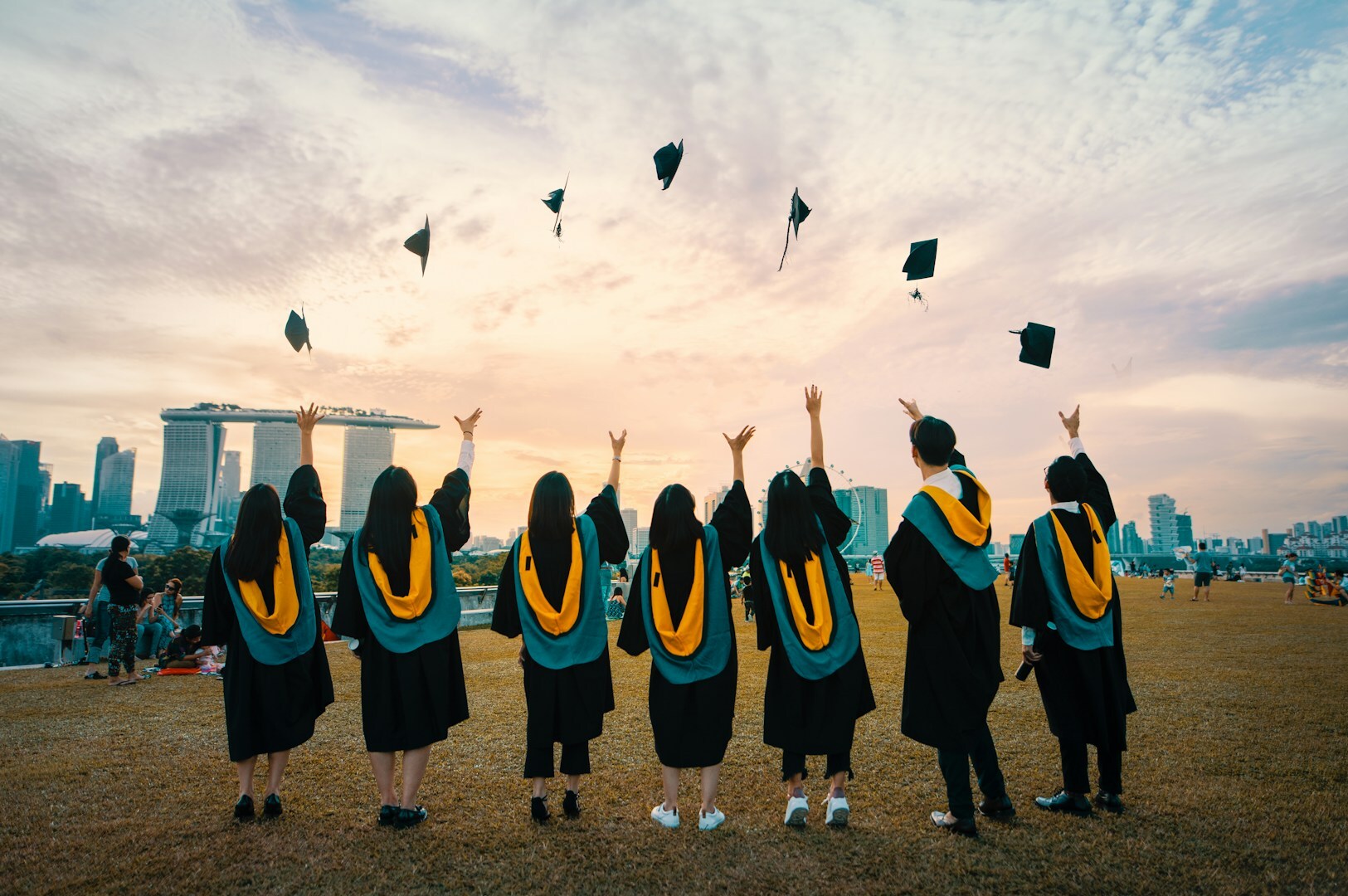
These tracks equip students with both practical and theoretical skills, producing highly skilled graduates ready for further studies or employment. Students who progress to polytechnics and universities after post-secondary education are referred to as tertiary education students.
Ages 19+: Tertiary and Continuing Education in Singapore
Students who complete junior college or polytechnic may progress to tertiary education at Singapore’s world-class universities:
- National University of Singapore (NUS)
- Nanyang Technological University (NTU)
- Singapore Management University (SMU)
- Singapore Institute of Technology (SIT)
- Singapore University of Social Sciences (formerly SIM University)
These Singapore universities offer degree courses, doctoral degrees, and professional training in fields such as health sciences, arts institutions, and teacher training.
Singapore is a world-class example of how education can foster innovation and produce highly skilled graduates through academic performance and lifelong learning. The government’s SkillsFuture initiative encourages adults to pursue further tertiary education, ensuring continual growth and adaptability in an evolving world.
Key Transition Points in the Education Level in Singapore
Primary to Secondary School Transition and the Primary School Leaving Examination
This major transition happens after the PSLE, when students are placed into streams in secondary schools. While the national examination is important, the emphasis is on finding the most suitable pace and pathway for each child.
Secondary School to Post-Secondary Transition
After ‘O’ or ‘N’ Levels, students select their next step:
- Academic routes via junior colleges
- Practical routes via polytechnic institutions or vocational education through ITE
Parents are encouraged to attend school open houses to explore options and discuss their child’s academic interests and goals.
Post-Secondary to University Education Transition
Students who perform well in A Levels or diploma programmes can apply to Singapore universities. Admission considers academic performance, co-curricular activities, and personal achievements.
Singapore regularly participates in international student assessment programs such as the Programme for International Student Assessment (PISA). The results from these international student assessments are used to inform educational policies and initiatives, aiming to improve student outcomes and maintain high standards in the education system.
Some students may also apply to specialized independent schools or pursue education overseas to broaden their perspectives.ue local integration, bilingualism, and affordability, the Singapore public school experience is an excellent option. If you prefer a specific curriculum or a more international environment for a shorter stay, a private education institution may be a better fit.
Private Tuition and Alternative Education Options in Education Singapore
In addition to the robust public education system, Singapore offers a variety of private education options for families seeking alternative pathways. Private schools, including international schools and specialized institutions, cater to students who may benefit from a different learning environment or curriculum.
Many private schools in Singapore offer globally recognized programs such as the International Baccalaureate (IB) or Cambridge International Examinations (CIE), providing students with an international perspective and a diverse educational experience. These schools often feature smaller class sizes, flexible timetables, and a focus on specific interests like the arts, sports, or languages.
Private education can be particularly beneficial for students who require specialized support, such as those with learning differences or those seeking vocational training not widely available in mainstream schools. While private schools typically have higher fees than public schools, they offer families greater choice and flexibility in tailoring education to their child’s unique needs and aspirations.
Decoding Common Education Terms in Singapore
- Subject-Based Banding (SBB): Allows students to take higher-level subjects based on strengths.
- Direct School Admission (DSA): Lets students gain early admission based on talents beyond academics.
- Integrated Programme (IP): A continuous six-year route from secondary school to pre-university education without ‘O’ Levels.
- National ITE Certificate (Nitec): Qualification awarded after completing vocational courses at ITE.
- Through-train Programme: Enables students to progress without taking major national examinations at certain levels.
- National Institute: Refers to official government or state-affiliated organizations responsible for specialized education and training, such as the National Institute of Education (NIE) and the National Institute of Early Childhood Development (NIEC). These institutes oversee teacher training, professional development, and certification processes within the education system.
Conclusion: Navigating the Education Level in Singapore with Confidence
While the education structure in Singapore may seem full of pathways and acronyms, it is a thoughtfully designed system built to prepare students for lifelong success, with a strong emphasis on bilingualism and the compulsory learning of mother tongue languages to preserve cultural heritage and promote multicultural understanding. Each stage—from primary school to tertiary education—is designed to nurture curiosity, discipline, and the pursuit of excellence.
Singapore’s education model, managed by the Ministry of Education, integrates academic subjects, moral education, and co-curricular activities to build well-rounded, globally competitive learners.
Whether your child attends a mainstream school, independent school, or vocational school, the journey offers countless opportunities for growth. By understanding the education levels in Singapore and engaging with your child’s progress, you become an essential partner in shaping their bright, confident future.
For a more detailed breakdown of admission processes, curriculum pathways, and school options, see our Comprehensive Guide to the Singapore Education System for Expat Parents.